


Introduction
From Automation to Intelligence
Outdated Trucking Management Systems (TMS) rely heavily on manual operations — order creation, onboarding, accounting, and more. This leads to errors, delayed billing, slowed operations, higher costs, and lower profits.
While automation TMS platforms exist today, they are not intelligent enough to handle the growing complexity of the industry: unpredictable fuel prices, lane rates, market fluctuations, operational disruptions, and rising customer expectations for faster, transparent deliveries.
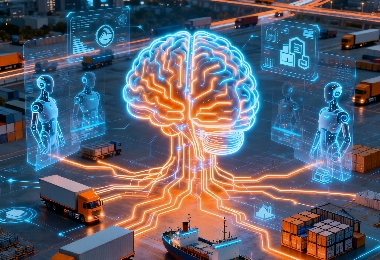
AI agents take TMS beyond automation They don’t just perform tasks — they anticipate, adapt, and optimize in real time. By leveraging machine learning, predictive analytics, and contextual awareness, AI agents transform TMS into a smart decision-making engine, guiding every operational choice across your operations.
In this blog, we explore how AI agents are redefining TMS in modern trucking operations — and why this shift matters more than ever.
1. Smarter Order Management
In traditional TMS systems, orders often arrive through multiple channels — emails, Google Drive, or shared folders — and must be entered manually. This consumes hours and often results in errors, duplicates, or lost orders.
AI agents eliminate this bottleneck by reading, validating, and automatically creating or updating orders in the system, ensuring faster, more accurate processing with minimal human effort.
Key Impacts:
- 95% Fewer Manual Errors
- 85% Faster Order Processing
- Lower Operational Costs
2. Seamless Onboarding Management
Onboarding new drivers, carriers, trucks, trailers, or customers has traditionally been paperwork-heavy and slow. Manual verification delays operations and ties up back-office teams.
AI agents streamline the process by reading, validating, and recording all applications and documents automatically, ensuring every partner is ready to operate faster.
Key Impacts:
- 85% Faster Carrier Onboarding
- 95% Faster Driver Onboarding
- 75% Faster Customer Onboarding
3. Real-Time Routing Intelligence
Traditional route optimization calculates a single “best” path at the start of the day. AI agents continuously adjust routes based on live data — accidents, road closures, or sudden demand changes — optimizing every trip until the last mile.
Key Impacts:
- Fuel Efficiency: Shorter, faster routes lower operating costs.
- Operational Agility: Adapt instantly to disruptions.
- Sustainability: Reduced miles traveled lower emissions.
4. AI-Powered Load Optimization
Manual load planning often leads to underutilized trucks, unnecessary trips, and higher fuel consumption. AI-driven load optimization consolidates shipments, plans efficient routes, and provides real-time visibility across LTL and FTL operations.
Key Impacts:
- Higher Utilization: Every truck carries optimal loads.
- Lower Costs: Fewer trips and reduced fuel consumption.
- Improved Safety: Balanced loads minimize wear, tear, and risk.
5. Predictive Decision-Making
Traditional TMS systems respond only after problems occur — delayed routes, late shipments, or scheduling conflicts. AI agents anticipate potential disruptions using real-time data such as weather, traffic, and service alerts, recommending proactive actions to keep trucks and deliveries on track.
Key Impacts:
- Reduced Downtime: Address risks before they cause delays.
- Cost Savings: Minimize fuel waste and penalty charges.
- Better Customer Experience: Deliveries remain reliable under changing conditions.
6. Intelligent Accounting
Manual entry of bills, invoices, and financial data slows operations and increases errors. AI accounting agents extract, classify, and post financial documents automatically, providing accurate, real-time visibility into costs and revenue.
Key Impacts:
- End-to-End Financial Accuracy
- Faster Billing & Bookkeeping
- Real-Time Visibility into Costs and Revenue
7. Adaptive Intelligence
Unlike static systems, AI agents learn from every decision. They refine routing strategies, demand forecasts, and load assignments over time, continuously improving operations.
Key Impacts:
- Greater Accuracy: Predictions become more reliable over time.
- Operational Excellence: Continuous workflow optimization.
- Scalability: Systems grow smarter as operations expand.
8. AI as a Strategic Advisor
Beyond daily operations, AI agents provide strategic insights to trucking managers. They can simulate “what-if” scenarios — such as fuel price surges or demand spikes — and recommend long-term strategies for competitive advantage.
Key Impacts:
- Better Planning: Long-term decisions backed by data.
- Competitive Edge: Stay ahead of market shifts.
- Higher ROI: Data-driven strategies maximize resources.
The Road Ahead
The shift from basic automation to AI-driven intelligence marks a turning point in trucking technology. AI agents are no longer just tools for efficiency — they are becoming the strategic brains behind modern TMS, capable of making decisions that directly impact profitability, sustainability, and customer satisfaction.
As the trucking industry grows more complex, AI agents will continue to evolve, transforming TMS into the central nervous system of fleet operations — constantly sensing, learning, and adapting to change.